

Un viaggio nelle notizie, nei siti, nelle testimonianze dell'Europa medievale. A cura dell'Associazione Culturale Italia Medievale. A journey in the news, sites, in the testimonies of medieval Europe. Organized by Associazione Culturale Italia Medievale
Visualizzazione post con etichetta medieval. Mostra tutti i post
Visualizzazione post con etichetta medieval. Mostra tutti i post
giovedì 5 maggio 2022


sabato 14 novembre 2020
Modus Vivendi
Modus Vivendi
Religious Reform and the Laity in Late Medieval Europe
edited by Miri Rubin
pp. 152, € 39,00
Viella, 2020
ISBN: 9788833137063

Modus Vivendi spans European regions across the period
1350-1500 in its studies, based on texts, objects, and images which have
been little studied so far.
Miri Rubin is Professor of Medieval and Early Modern History at Queen Mary University of London. Her most recent books are Cities of Strangers: Making Lives in Medieval Europe (Cambridge University Press, 2020), and the translation/edition in Penguin Classics, Thomas of Monmouth, The Life and Passion of William of Norwich (Penguin Press, 2014).
venerdì 28 febbraio 2020

mercoledì 24 luglio 2019

martedì 5 febbraio 2019

lunedì 14 gennaio 2019
Digestum vetus e os fragmentos do Decretum Gratiani
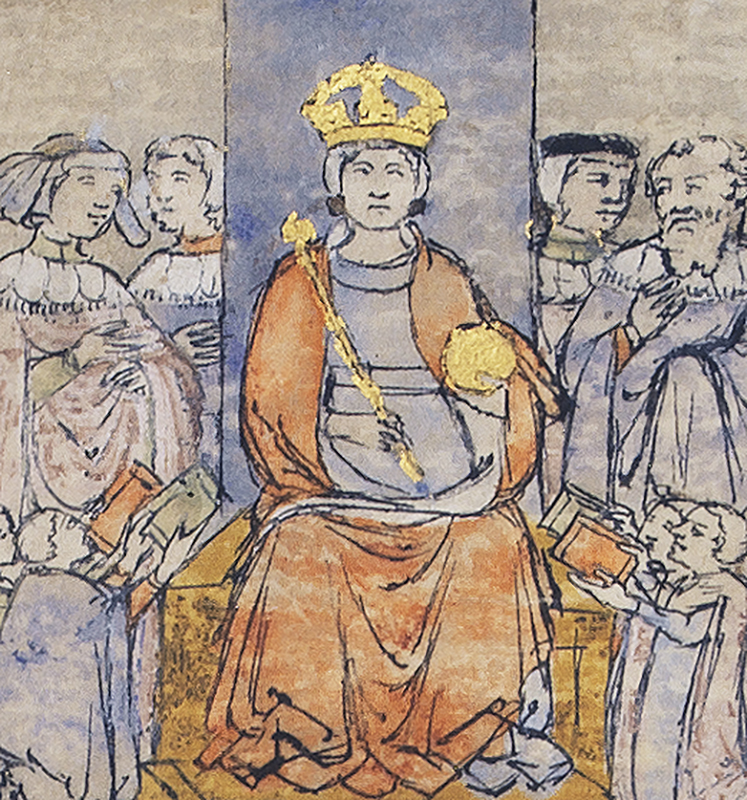
Digestum vetus e os fragmentos do Decretum Gratiani
17 janeiro 2019 Coleção do Fundador Av. de Berna, 45A
, Lisboa.
O Museu Calouste Gulbenkian guarda dois fragmentos iluminados e um códice medieval de Ius commune (Direito comum). O Direito comum – composto pelo Corpus Iuris Civilis (Corpo de Direito Civil), pelo Corpus Iuris Canonici (Corpo
de Direito Canónico) e respetiva literatura jurídica – constitui uma
das mais importantes fontes de Direito vigentes em Portugal, desde a
Idade Média até à Lei da Boa Razão de 1769.
1. De acordo com a sistematização medieval o Corpus Iuris Civilis–
compilação de Direito romano mandada elaborar pelo Imperador
Justiniano, no século VI – estava dividido em cinco partes: o Digesto
velho, o Digesto novo, o Digesto esforçado, o Código e o Volume Pequeno.
O ms LA212 é um Digesto velho, que teria sido copiado e iluminado no
sul da França, no curso do século XIV.
2. O Corpus Iuris Canoniciestava sistematizado em seis
partes: Decreto de Graciano, Decretais de Gregório IX, Livro Sexto,
Clementinas, Extravagantes de João XXII e Extravagantes Comuns. Os
fragmentos M36A e M36B faziam parte de um Decreto de Graciano, a mais
importante fonte de Direito canónico medieval, que foi composto por
Graciano na primeira metade do século XII. As suas iluminuras são
atribuídas ao ateliê do Maître du Missel de Augier de Cogeux (ou
Cogenx), realizadas durante a primeira metade do século XIV,
provavelmente em Toulouse.
Neste seminário pretendemos destacar o aparato decorativo e
ilustrativo destes fragmentos jurídicos, relacionando-os com outros
manuscritos seus contemporâneos, e explicar a importância prática que
esses monumentos de Direito atingiram durante o período da Idade Média
portuguesa.
Orador: Maria Alessandra Bilotta e José Domingues.
giovedì 10 maggio 2018
Munkhbat. Mongolie médiévale

Munkhbat, artiste mongol contemporain se situe dans le droit fil de la tradition héritée du Moyen Age.
Il
s’y rattache par les thèmes traités: l’omniprésence des chevaux dans
la steppe mongole, la vie des princes et princesses, les grandes chasses
à cheval, le jeu de polo, mais aussi par le procédé pictural inspiré de
la Chine antique, celui du dessin à l’encre de Chine. Seule concession
faite par lui à la modernité, l’adjonction, à l’intérieur des contours
dessinés à l’encre de Chine, d’aplats de couleur réalisés à la gouache,
ce qui rend les tableaux plus vivants et plus lumineux sans altérer la
sobriété de l’ensemble.
Authentifiant ses toiles d’une
élégante signature, en caractères "oulghours", l’artiste se revendique
de la tradition et nous permet de rêver au passé mythique de la Mongolie
des temps anciens.
Durant sept siècles et jusqu’au siècle dernier, la Mongolie tantôt domina la Chine, tantôt fut dominée par elle, chacun des deux pays gardant ses différences, aussi bien ethniques que linguistiques et culturelles. Mais l’art pictural de la calligraphie et du dessin à l’encre de Chine fut l’un des traits caractéristiques de ces deux peuples.
Munkhbat est, à l’époque contemporaine, l’un des héritiers de cette tradition séculaire. Ce n’est un peintre de la nature. Seuls l’intéressent les humains et les chevaux. Il les représente presque toujours en mouvement, mais en souplesse, sans précipitation, comme s’ils participaient à une sorte de ballet. Ses tableaux évoquent la liberté sauvage des chevaux dans les steppes, les jeux musicaux des élites, la maîtrise des techniques de la chasse, la joie du jeu de polo. Les maîtres-mots qui pourraient servir à caractériser l’œuvre picturale de Munkhbat sont: harmonie, douceur, lumière, joie.
L’artiste a reçu le soutien de l’association culturelle ORIENT EXPOS qui lui a permis d’exposer et qui, par la suite, a fait don au musée des Arts asiatiques, des tableaux présentés aujourd’hui.
Durant sept siècles et jusqu’au siècle dernier, la Mongolie tantôt domina la Chine, tantôt fut dominée par elle, chacun des deux pays gardant ses différences, aussi bien ethniques que linguistiques et culturelles. Mais l’art pictural de la calligraphie et du dessin à l’encre de Chine fut l’un des traits caractéristiques de ces deux peuples.
Munkhbat est, à l’époque contemporaine, l’un des héritiers de cette tradition séculaire. Ce n’est un peintre de la nature. Seuls l’intéressent les humains et les chevaux. Il les représente presque toujours en mouvement, mais en souplesse, sans précipitation, comme s’ils participaient à une sorte de ballet. Ses tableaux évoquent la liberté sauvage des chevaux dans les steppes, les jeux musicaux des élites, la maîtrise des techniques de la chasse, la joie du jeu de polo. Les maîtres-mots qui pourraient servir à caractériser l’œuvre picturale de Munkhbat sont: harmonie, douceur, lumière, joie.
L’artiste a reçu le soutien de l’association culturelle ORIENT EXPOS qui lui a permis d’exposer et qui, par la suite, a fait don au musée des Arts asiatiques, des tableaux présentés aujourd’hui.
Exposition jusqu'à dimanche 24 juin 2018. Musée Départemental des Arts Asiatiques.
giovedì 3 maggio 2018

domenica 15 aprile 2018
Medieval Europe in Motion
Medieval Europe in Motion
The Circulation of Artists, Images, Patterns and Ideas from the Mediterranean to the Atlantic Coast (6th-15th centuries)
by Maria Alessandra Bilotta
Introduction by Gerardo Boto Varela
Conclusions by Xavier Barral i Altet
by Maria Alessandra Bilotta
Introduction by Gerardo Boto Varela
Conclusions by Xavier Barral i Altet
pp. 464, € 28,00
Officina di Studi Medievali, 2018
ISBN: 978-88-6485-106-8

Notions of movement and mobility are central to understanding many
aspects of medieval society. Essentially, movement involves connections
across time, objects, people, and space. The essays in this volume
investigate how the circulation, motion, and mobility of people,
patterns, and ideas influenced artistic creation between the 6th and
15th centuries – from the Mediterranean to the Atlantic coast.
Scholarship in the volume manifests the international scope of current
research on artistic and cultural circulation and mobility in the
European Middle Ages. In it, readers are presented with a detailed image
illustrating the effects of social and cultural exchange and mobility
on artistic creation. As a whole, the collection aims at developing
critical and constructive interdisciplinary revision of these matters.
New and exciting questions are also raised for future discussion. Works
from scholars specializing in history, history of art, palaeography,
codicology, literature, and the history of ideas are bound in a single
volume. The book brings together twenty-five contributions from: L. U.
Afonso, X. Barral i Altet, C. Barreira, M. A. Bilotta, G. Boto Varela,
E. Condello, L. Correia de Sousa, M. Cursi, G. Donati, J. Dubois, I.
Escandell Proust, P. Almeida Fernandes, D. Espada, M. Fiorilla, P.
Flor, L. Geymonat, J.-M. Guillouët, Ch. Heck, M. V. Herráez Ortega, A.
Lemos, E. Lozano, L. Marcozzi, A. A. Nascimento, C. Pulsoni, A. M.
Rodrigues, J. Rodrigues, C. Ruzzier, M. Signorini, C. Varela Fernandes,
G. Videira Lopes, C. Valdaliso, B. Van den Bossche.
mercoledì 7 febbraio 2018
The Waldensians in the Medieval and Early Modern Context
In recent years, the medieval and early modern Waldensians have
enjoyed a renewed scholarly interest giving rise to a number of new
publications. Moreover, 2017 marks the anniversary of Reformation which
resulted in a number of scholarly events. There are, however,
significant gaps in scholarship on the Waldensians, most notably a lack
of critical editions as well as studies around topics such as
intertextuality and the circulation of texts. Such research would allow
scholars in the field to gain a better knowledge of Waldensian text
production and the place of that movement within the medieval and early
modern religious space in Europe.
The Trinity Centre for Medieval and Renaissance Studies will be hosting a conference on the Waldensians on the 9th to 10th
February 2018 in Trinity College Dublin. The purpose of this conference
will be to advance this discussion of the movement and to foster
international collaboration in Waldensian studies.
For more information click here !
martedì 2 gennaio 2018
Late Medieval Papal Legation
Late Medieval Papal Legation
by Antonin Kalous
pp. 285, € 35,00 (Buy online with the 15% discount)
Viella, 2017
ISBN: 9788867289424

Late Medieval Papal Legation is a result of long term study
of papal legates in the late medieval period. Even though this crucial
institution of the reform papacy of the eleventh, twelfth and thirteenth
centuries kept its standards as designed in the classical canon law, it
was transformed according to the current needs of the papacy in later
periods. A substantial change came after the conciliar crisis and before
the radical transformation of the first half of the sixteenth century.
In the second half of the fifteenth and early sixteenth centuries, papal
legates de latere, as cardinals, travelled all around Europe
in support of the recovered papal authority after the conciliar period
and before the outbreak of the German Reformation.
This volume attempts to systematise the changes of this specific
period in the development of the papacy. It is based on extensive
research in the Vatican Archives and Library, other Italian and
especially Central European archives and libraries, and published
sources of the period. The volume focuses on the terminology and theory
of papal legation, on the sources and expression of legatine authority
and on the system in relation to practical matters (ceremonial,
travelling, finance), and political, diplomatic and ecclesiastical tasks
and topics. The study of the legatine office is exceptionally complex
and ranges from high diplomacy and spiritual benefits brought for
distinct provinces, to the personal interests and involvement of
individual cardinals. This book tries to open discussion on research
that has only just started and needs to be developed as an integral part
of our understanding of medieval papal and European history.
Antonín Kalous is an associate professor of Medieval and Renaissance
history at Palacký University, Olomouc, Czech Republic. His research
focuses mostly on ecclesiastical, cultural and political history of
late-medieval Central Europe and on papacy of the same period. With
Viella, he published The Transformation of Confessional Cultures in a Central European City: Olomouc, 1400-1750
(ed. by, 2015).
mercoledì 22 novembre 2017
Le Grand Armorial équestre de la Toison d’or
Le Grand Armorial équestre de la Toison d’or
Michel Pastoureau et Jean-Charles de Castelbajac
256 pages, 180 illustrations, € 49,00
BnF, Éditions de la Bibliothèque nationale de France, 2017
ISBN: 978-2-7177-2762-3

Cet ouvrage est la réédition à l’identique d’un manuscrit médiéval représentant les membres de l’ordre de chevalerie de la Toison d’or, peint à la gouache sur papier au milieu de XVe siècle et précieusement conservé à la Bibliothèque de l’Arsenal au titre de trésor national depuis le XVIIIe siècle.
L’expressivité des figures équestres, la fougue des cavaliers, l’audace des cimiers, la somptuosité des couleurs, la beauté flamboyante de l’ensemble… tout
invitait à ouvrir la réflexion à un univers artistique. Aussi ce fac-similé est-il enrichi du double regard que portent sur cette pièce exceptionnelle Michel Pastoureau, historien de l’art, spécialiste, entre autres, des emblèmes et auteur de nombreux ouvrages sur la couleur, et Jean-Charles de Castelbajac, prestigieux créateur de mode de notre
époque, passionné par l’art héraldique.
mercoledì 8 novembre 2017

domenica 15 ottobre 2017

martedì 18 luglio 2017

venerdì 14 luglio 2017

domenica 9 luglio 2017

mercoledì 7 giugno 2017
The Normans in the South

Mediterranean Meetings in the Central Middle Ages
Friday 30 June – Sunday 2 July 2017 St Edmund Hall, University of Oxford
For the event on facebook click here !
sabato 3 giugno 2017

giovedì 1 giugno 2017
Os manuscritos universitários iluminados na Europa medieval (séculos XIII-XIV): produção e circulação. Uma introdução histórica e metodológica

O curso pretende traçar, através da
análise de alguns exemplos específicos, as etapas mais importantes da
história da produção, ilustração e decoração do manuscrito universitário
na Idade Média (Direito, Teologia, Medicina). Será dada especial
atenção aos problemas codicológicos (características materiais,
funcionalidade estrutural no âmbito do ensino universitário),
estilísticos e iconográficos (os ciclos ilustrativos), às questões
relacionadas com os patrocinadores (mestres e estudantes) e à sua
circulação (a peregrinatio academica) no território europeu, e
ainda ao contexto histórico, económico e social da produção (controlo
das universidades sobre a produção dos livros) e às técnicas de execução
(funcionamento das oficinas dos stationarii; sistema da pecia).
No final do curso, o estudante estará
familiarizado com algumas questões de método, como a distinção das
produções librárias de várias áreas geográficas, as diversas tipologias
de livros, os diferentes estilos, a periodização da iluminura medieval
universitária, a geografia histórica, política, social e
histórico-artística da produção iluminada universitária, a leitura
estilística e iconográfica desta produção.
O estudante possuirá assim um
conhecimento básico sobre história das universidades e acerca da
produção do livro universitário do período medieval, bem como disporá
das ferramentas metodológicas necessárias para a leitura deste fenómeno
histórico, cultural e artístico. O estudante também reconhecerá, através
da análise de casos específicos, as diferentes tipologias de livros e
os diferentes estilos e saberá usar uma terminologia específica.
Maria Alessandra Bilotta é historiadora da arte, medievalista no Instituto de Estudos Medievais
(IEM) da FCSH da Universidade Nova de Lisboa. A sua investigação atual
se concentra sobre os manuscritos jurídicos iluminados medievais
conservados em Portugal, um tema que se relaciona diretamente com a
temática do curso.
Programa online click here !
Iscriviti a:
Post (Atom)