martedì 11 marzo 2008

Medieval Europe Timeline

Medieval Europe Timeline

500 CE: Medieval Europe - Clovis, founder of the Frankish state, conquers most of France and Belgium, converting his territories to Western Catholic Christianity. He founds the Merovingian dynasty and passes his kingdom on to his sons, who begin fighting one another for additional territory.

590 CE: Medieval Europe - Pope Gregory, originally a Benedictine, creates a religious policy for western Europe by fusing the Roman papacy with Benedictine monasticism. He creates the Latin church, which serves to counteract the subordination of the Roman popes to Eastern emperors. As the fourth great "church father," St. Gregory the Great draws his theology from Ambrose of Milan, Jerome and AUGUSTINE OF HIPPO. His concepts of purgatory and penance widen the gulf between the Eastern and Western Churches. He reigns until his death in 604 CE.

600 CE: Medieval Europe - The early Middle Ages begin in 600 CE and last until 1050 CE.

610 CE: Medieval Europe - Heraclius becomes Emperor in Constantinople as the Persian Empire is attempting the takeover of Byzantine civilization. For the sake of convenience, the rule of Heraclius generally marks the beginning of Byzantine history, though it can be argued that Byzantine civilization begins with Diocletian, Constantine or Justinian.

627 CE: Medieval Europe - Persia is conquered by Byzantine forces. The Jerusalem cross is retrieved from the Persians, who stole the relic in 614 CE. Heraclius reigns until his death in 641 CE.

650 CE: Medieval Europe - Arab forces conquer most of the Byzantine territories, formerly occupied by the Persians.

677 CE: Medieval Europe - The Arabs attempt to conquer Constantinople but fail.

687 CE: Medieval Europe - Pepin of Heristal, a Merovingian ruler, unites the Frankish territories and builds the center of his kingdom in Belgium and other Rhine regions. He is succeeded by his son, Charles Martel, who forms an alliance with the Church which helps the Merovingian Dynasty (and Christianity) to expand into Germany. Pepin the Short succeeds his father, Charles Martel, and strengthens the alliance between Benedictine missionaries and Frankish expansion.

700 CE: Medieval Europe - Benedictine missionaries complete the conversion of England begun by St. Gregory the Great.

717 CE: Medieval Europe - The Arabs attempt to conquer Constantinople for the second time. Byzantine Emperor Leo the Isaurian, who reigns until 741 CE, counters the Arab attempt with "Greek Fire" (a liquid mixture of sulfur, naphtha and quicklime which is released from bronze tubes, situated on ships and on the walls of Constantinople) and great military strength. Leo defeats the Arab forces and reconquers most of Asia Minor. The territory of Asia Minor, together with Greece, becomes the seat of Byzantine civilization for several centuries.

735 CE: Medieval Europe - Venerable Bede, an Anglo-Saxon Benedictine scholar, writes the History of the English Church and People in Latin, perhaps the best historical writing of medieval history.

lunedì 10 marzo 2008

Alcoholic Drinks of the Middle Ages

Alcoholic Drinks of the Middle Ages
The intent of this writing is not to provide the reader with a recipe list, although recipes will be included in the text. What I hope to achieve is to provide a single, comprehensive source of documentation for all phases of the production of alcohol and its use in various drinks which can be used for competitions in the Arts and Sciences, or simply for personal knowledge. This type of information is often more difficult to find in our craft than it might be in many others and I hope that this will become a useful reference for all brewers and vinters.

To this end I have located what period sources that I could find (The Closet of Sir Kenelme Digbie Kt. Opened and Delightes for Ladies being excellent sources, as were others), as well as many others which are authoritative on the subject. The reader will find, herein, liberal doses of direct quotations from these writings, with the original sources credited, either directly in the text, or in associated footnotes. The footnotes will usually state only the author's name, the article or book referenced and the pages referenced. This will then refer to the complete bibliography. I have included a number of actual recipes throughout this writing, all of which are period recipes with the only exception being Mistrss Priscilka's recipe for Sake. Modifications can be made in these recipes as long as the materials used are correct for the type of drink which is being prepared the results should imitate the actual period beverage to within reasonable limits. Please note that modern tastes are generally quite different than those held in period and some modifications may be made simply so that oneself and one's friends will be willing to drink the finished product. Substitutions and modifications, however, have to be carefully chosen, so as not to change too much the overall character of the finished drink.

Procedures, however, are another matter entirely. I most heartily agree with Mistress Prisilka od Cervany Kamen (aka Priscilla Kucik), who recommends the use of period recipes along with modern preparation techniques1. These techniques include cleanliness to the point of sterility and the use of non-porous airtight containers. Another point on the recipes, in the case of actual period recipes which have come down as they were originally written, I will repeat them in the same manner so that techniques, style and materials can be learned.

http://mysite.verizon.net/mshapiro_42/calcohol.html

sabato 8 marzo 2008

Medieval Churches and Monasteries

Medieval Churches and Monasteries

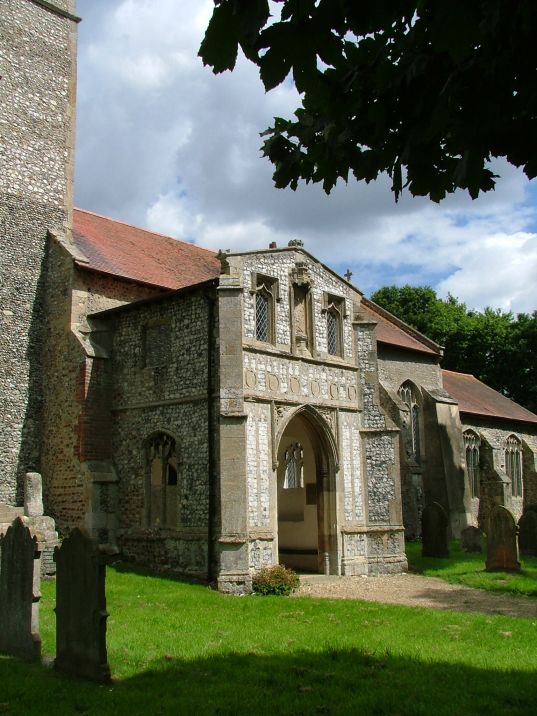
Apart from the manor, the church was the main focus of community life. Church parishes were usually the manor villages. The parish priest was appointed by the lord of the manor and was given a house. He was obliged to carry money for alms with him, keep up the church, and provide hospitality to travellers.

Priestly Duties. The priest was usually a commoner by birth, though serfs were tied to the land and were not allowed to become priests. The priest officiated at church services, weddings, baptisms, funerals, and visited the ill. He earned his living from the income for parish lands, fees for services, and tithe money.

Tithing. Tithing was a system whereby each person was expected to give 1/10 of their earnings to support the church. The tithe income was divided up evenly between the parish priest, the church maintenance fund, the poor, and the bishop.

Uses of the Church. The chancel (where the altar is) belonged to the lord. The nave and the tower belonged to the people of the parish. Manor courts were often held in the nave, and tenants came there to pay their rent, or scot. A free meal was given to those who paid their scot, hence our term, "scot free".

The church tower occasionally served double duty as the priest's residence and often was built to be defended in times of trouble. School was held in the church porch or in a room over it. The church's role went far beyond religion; it was the centre of village community life.

www.britainexpress.com/History/TheMedievalChurch.htm

mercoledì 5 marzo 2008

Medieval bridges

Medieval bridges at Hemington Quarry

Since 1985 Dr. C. R. Salisbury has, in conjunction with the Leicestershire Archaeological Unit (LAU), been undertaking a survey of the floodplain archaeology of the River Trent around Castle Donington. The survey has included the detailed recording of ancient river channels and associated structures as they have become visible in the exposed faces of the Ennemix gravel quarry at Hemington near Castle Donington (grid reference SK 459302).

The quarry is located near the centre of the floodplain formed by the confluence of the rivers Trent, Soar and Derwent and is sited to exploit the thick deposits of sand and gravel which overlie deposits of Mercia Mudstone. The lower sands and gravels were probably deposited after the maximum glaciation of the last Ice Age (Devensian) between about 15,000 and 10,000 BC. The upper sands and gravels have accumulated since the start of the Flandrian period (around 10,000 BC) during which time the Trent shrank and settled into its present meander belt. During this time the lateral migration of the river has deposited between 2m and 5m of sand, gravel and alluvial silt and clay. The dynamism of the river's migration has led to the excellent survival of riverine structures in the old channels and the anaerobic conditions have ensured the survival of organic remains. The thickness of the overburden deposited by the river makes conventional archaeological prospection difficult and constant monitoring of quarrying is necessary to ensure the recording of both archaeological sites and other, natural, features.

lunedì 3 marzo 2008

Medieval Islam

Medival Islam and culture

Islamic cultures are among the most interesting, complex, and dynamic in the world. At the same time, they are among the least known in the West. From its dramatic rise in the seventh century A. D. to the present, Islamic civilization has covered a large part of the globe, incorporating many subcultures and languages into its orbit, and vigorously engaging the peoples around it.
Medicine was a central part of medieval Islamic culture. Disease and health were of importance to rich and poor alike, as indeed they are in every civilization. Responding to circumstances of time and place, Islamic physicians and scholars developed a large and complex medical literature exploring and synthesizing the theory and practice of medicine. This extensive literature was not specialized in the sense that modern medical literature is. Rather, it was integrated with learned traditions in philosophy, natural science, mathematics, astrology, alchemy, and religion.
http://www.nlm.nih.gov/hmd/arabic/med_islam.html

domenica 2 marzo 2008

Medieval Jews : Overview: The Story, 622-1666

Medieval Jews lived from Spain to the Sahara, from Baghdad to Britain, generally under the rule of either Muslims or Christians. (From the destruction of the Second Temple in 70AD until the founding of Israel in 1948, there was no autonomous Jewish state.) While some commonality of experience existed for Jews living in the domain of the crescent, where there was no separation of church and state; life for Jews under the cross varied, as the separation of church and state, coupled with the absence of unified religious law regarding Jews, led to arbitrary application of policy and punishment.
Under Islam, Jews were governed by the Pact of Omar. This contract, established in the seventh century, required non-Muslims living under Muslim rule to abide by a host of discriminatory regulations, such as rising in the presence of a Muslim, dressing in distinctive garb, and (re) building synagogues only when absolutely necessary, and then constructing humble structures.

jewishhistory.com/medieval.phtml
jewishhistory.huji.ac.il/Internetresources/historyresources/medieval.htm

sabato 1 marzo 2008

Historie du Languedoc

Historie du Languedoc
de Gauthier Langlois
Le site Paratge présente mes recherches en histoire médiévale, histoire des techniques et ethnologie. Vous y trouverez des articles, des documents et des bibliographies portant principalement sur l'histoire du Languedoc.
http://paratge.chez-alice.fr/histoire.htm#sommaire