http://www.fordham.edu/halsall/source/turkishpoetry1.html
domenica 11 febbraio 2007
Medieval sources: Turkey
http://www.fordham.edu/halsall/source/turkishpoetry1.html
sabato 10 febbraio 2007
Medieval Games
The games of medieval Europe were mainly the same as those of Egypt, Greece, and Rome: dice, knucklebones, marbles, checkers.
Chess, invented in the Islamic Empire, began to be played in Europe toward the end of the Middle Ages, and after paper reached Europe from China, playing cards also began to appear in the later Middle Ages.
We also see more children's toys from this time: whistles and little dishes and dolls.
As for spectator sports, the gladiatorial games of the Roman Empire ended with the fall of Rome. In the Christian era, men no longer fought men to the death in the arenas.
But many similar entertainments survived and flourished. In the old amphitheaters, many of which still continued to be used, men continued to fight animals: bears and bulls were the most popular of these, because they were the most dangerous. You can still see bull-fights today in Spain (and in Mexico), and they are still fought in amphitheaters. And people who had been convicted of crimes continued to be executed as entertainment.
go to the site:
http://www.historyforkids.org/learn/medieval/games/index.htm
Chess, invented in the Islamic Empire, began to be played in Europe toward the end of the Middle Ages, and after paper reached Europe from China, playing cards also began to appear in the later Middle Ages.
We also see more children's toys from this time: whistles and little dishes and dolls.
As for spectator sports, the gladiatorial games of the Roman Empire ended with the fall of Rome. In the Christian era, men no longer fought men to the death in the arenas.
But many similar entertainments survived and flourished. In the old amphitheaters, many of which still continued to be used, men continued to fight animals: bears and bulls were the most popular of these, because they were the most dangerous. You can still see bull-fights today in Spain (and in Mexico), and they are still fought in amphitheaters. And people who had been convicted of crimes continued to be executed as entertainment.
go to the site:
http://www.historyforkids.org/learn/medieval/games/index.htm
venerdì 9 febbraio 2007
Medieval Minds
giovedì 8 febbraio 2007
La Polonia Medievale
Il nome della Polonia trae origine dal nome della tribù dei Polanie, ovvero popolo che lavora i campi (campo = "pole" in polacco), che viveva nel bacino del fiume Warta, nella zona più tardi denominata Wielkopolska (Polonia Magna). Il centro del potere si trovava allora a Gniezno. Nel corso del X secolo, i duca Polanie (i Piast) conquistarono ed unirono sotto la loro autorità le altre tribù che vivevano nel territorio racchiuso fra i fiumi Odra e Bug, il litorale baltico e i Carpazi. Il primo duca della dinastia dei Piast, menzionato dalle fonti dell'epoca, fu Mieszko I (intorno al 960-992), considerato il fondatore dello Stato polacco, che riorganizzò i territori conquistati e li riunì in un sistema statale omogeneo. La Polonia dal X al XII secolo, come del resto tanti altri Stati del primo Medioevo, fu una monarchia, considerata dai suoi sovrani come proprietà dinastica – cioè patrimonium. Il duca e il gruppo di pochi magnati che lo circondava, disponevano di un potere forte e centralizzato mentre l’esercito era formato da una squadra di alcune migliaia di soldati scelti, equipaggiati e mantenuti dallo stesso duca. Lo stato fu diviso in provincie in maniera simile alla divisione dei territori tribali, le provincie si dividevano a loro volta in circa cento distretti urbani. vai al sito per il contributo:
http://www.ambasciatapolonia.it/Files/Dossier/Storia/Storia_Polonia1.htm
domenica 4 febbraio 2007
Education pour le Moyen Age
Période couvrant dix siècles environ, le Moyen Age s’étend de la fin de l’Antiquité au début de la Renaissance, de la fin du Ve à la fin du XVe siècle. Traditionnellement, les historiens font commencer le Moyen Age en 476, date de la déposition du dernier empereur romain, Romulus Augustule, par le chef barbare Odoacre. 1492, année de la “découverte” de l’Amérique par Christophe Colomb, marque la fin du Moyen Age.
Des changements importants étaient survenus dans t’empire romain aux IIIe et IVe siècles. La religion chrétienne, autorisée par l’empereur Constantin en 314, était devenue la religion officielle. L’empire romain avait été divisé en deux parties, chacune dotée d’une capitale: Rome pour l’empire d’Occident, Constantinople, fondée par Constantin sur le site d’une ville dont le nom grec est Byzance, pour l’empire d’Orient.
Le site est une education au Moyen Age pour les enfants:
http://education.france5.fr/moyenage/
sabato 3 febbraio 2007
Medieval appointments
This conference aims to encourage heritage practitioners and academics from different disciplines to debate the key terms of its title. It encourages them to discuss the methods by which they analyse material culture, but also the way they present their findings: how the analytical languages and methods of presentation used within their disciplines reconstruct material culture for a wider audience. Those working on such issues both within and outside the periods under consideration are invited to come and talk about the transferability of methodologies - to debate the existence of a specifically pre-modern material culture. More intormations to the site:
http://www.crems.bham.ac.uk/objects.htm
giovedì 1 febbraio 2007
Digital Mirror
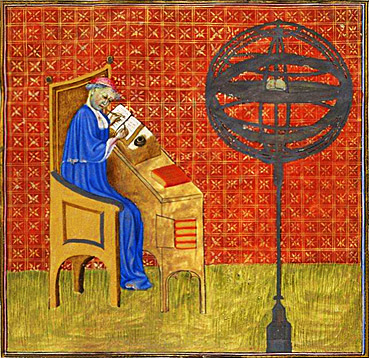
Digital Mirror: Medieval Astronomy
The oldest scientific manuscript in the National Library is NLW MS 735C, which contains various Latin texts on astronomy. The volume, written in Caroline minuscule, consists of two sections, the first (ff. 1-26) copied c. 1000, in the Limoges area of France, probably in the milieu of Adémar de Chabannes (989-1034), whilst the second (ff. 27-50), from a scriptorium in the same region, may be dated c. 1150.
go to the site:
http://www.llgc.org.uk/drych/drych_s060.htm
Resources for Medieval Studies
Resources for Medieval Studies The Labyrinth: La Georgetown University sponsorizza un sistema di ricerca telematica sulle fonti del Medioevo suddivise per tematiche.
go to the site:
http://labyrinth.georgetown.edu/
Iscriviti a:
Post (Atom)